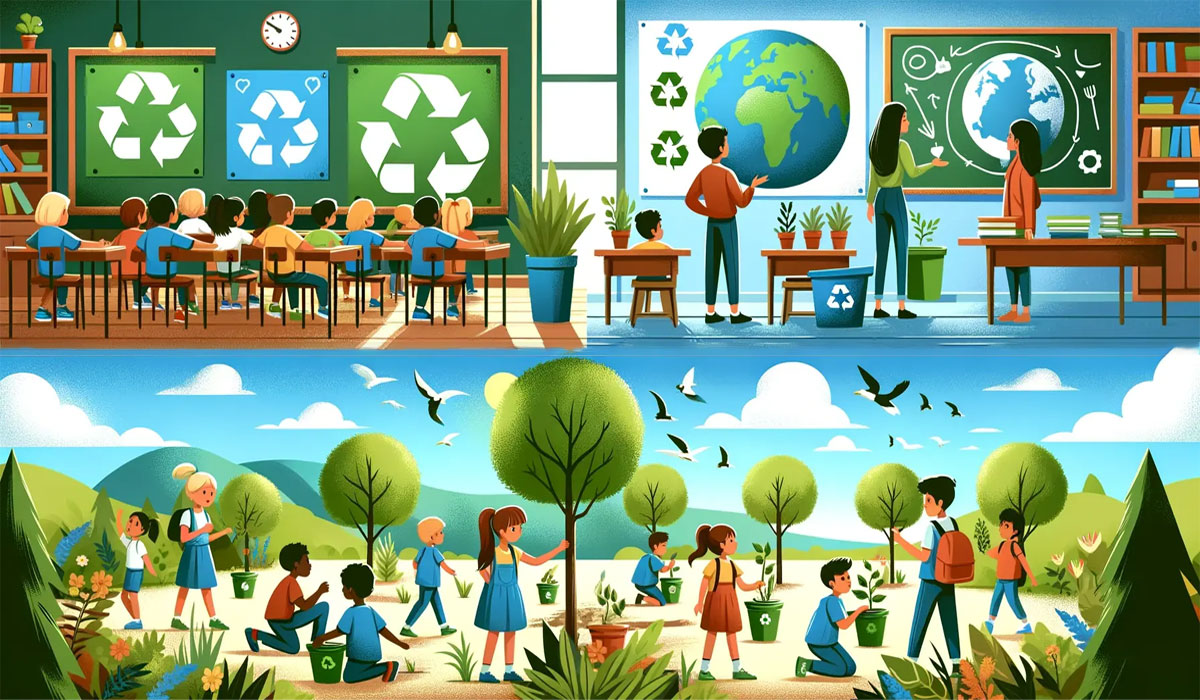
The Future Of Learning Lies In Education For Sustainable Development
The future of education is evolving rapidly, and sustainability has become a key foundation for meaningful learning.
This shift encourages students to think critically about real world challenges such as climate change, resource management, and global inequality, while also empowering them with the knowledge and skills needed to create practical solutions that contribute to a more sustainable and balanced future for society as a whole. Read more only at Seeds of a Living Planet.
Understanding Education
Education for sustainable development is an approach that integrates environmental, social, and economic awareness into the learning process. It helps students understand how their actions affect the world around them, both now and in the future. As a result, learning becomes more meaningful because it connects knowledge with real life challenges.
This form of education builds responsible global citizens. It encourages learners to make informed decisions that support ecological balance, social justice, and economic stability. In this way, students learn that their choices can shape a better future for everyone.
In addition, education for sustainable development connects theory with practice. Students do not only learn concepts in class, but they also apply them in daily life. Therefore, learning becomes more active, practical, and impactful.
Schools And Institutions
Schools and educational institutions play a key role in promoting sustainable development. They shape young minds and introduce values that support environmental care and ethical behavior. Because of this, schools become the foundation of long term change.
Many schools now include sustainability topics in their curriculum. For example, subjects like science, geography, and social studies cover climate change, pollution, and resource management. As a result, students better understand real world environmental problems.
Moreover, schools also practice sustainability in daily operations. They reduce waste, save energy, and encourage recycling. In addition, teachers and staff model eco friendly behavior, which strengthens student awareness and habits.
Also Read: Powering the Future! Renewable Energy Secrets Changing the World Forever
Students And Society
Students who learn sustainability become more responsible and aware of global issues. They understand challenges such as climate change, inequality, and resource depletion. Therefore, they are more prepared to take positive action in society.
This type of education also improves thinking skills. Students learn to analyze problems from different perspectives. In addition, they develop creativity and problem solving abilities that help them find long term solutions.
As students grow into adults, they carry these values into their careers and communities. As a result, sustainable thinking spreads into workplaces, industries, and governments. This creates long lasting positive change in society.
Future Opportunities
Despite its importance, education for sustainable development still faces challenges. Many regions lack resources, trained teachers, and strong policies. Therefore, implementation is often uneven across different countries.
However, technology is creating new opportunities. Digital platforms and online learning make education more accessible. In addition, global collaboration allows countries to share knowledge and resources more easily.
As awareness increases, governments and schools are starting to adopt sustainability more widely. Consequently, education systems are slowly changing. This shift will help create a future generation that is more responsible and environmentally conscious.
Image Source:
- First Image from kompas.id
- Second Image from vietnam.vn